


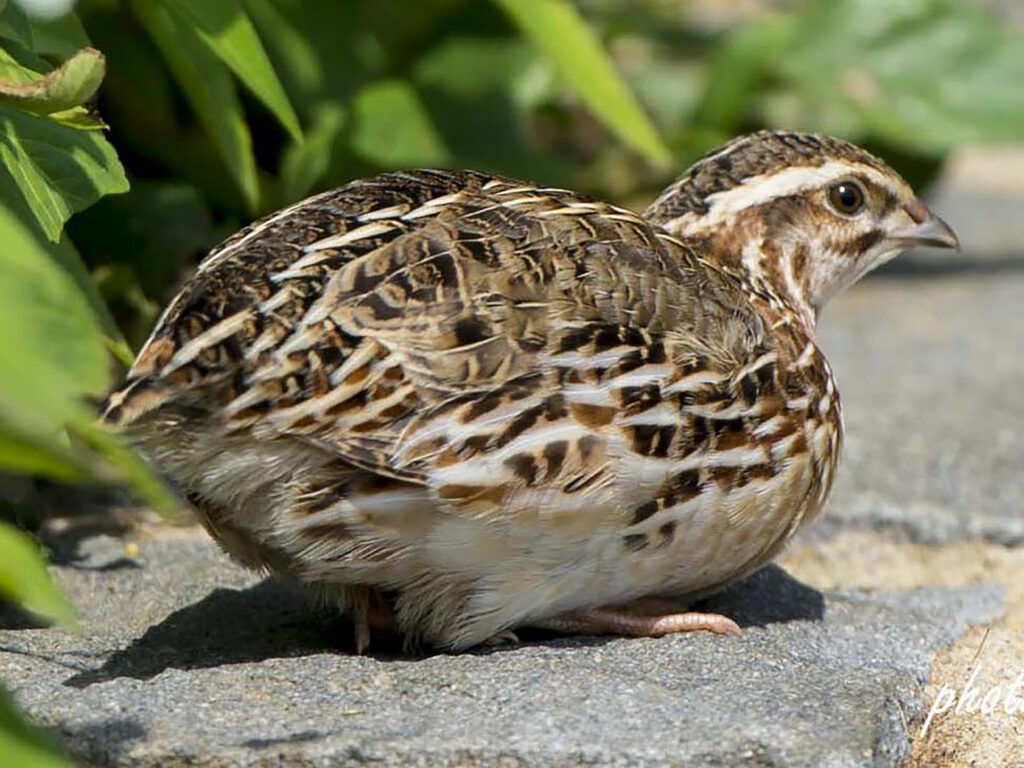
Quails
Quail meat is eaten mainly in North India, particularly in Punjabi winters, although its consumption is fast increasing in other parts of the country like Telangana.
Years later in 1997, realising that Japanese quails (Coturnix japonica) were protected under the Wild Life Protection Act, 1972 (WLP Act), the Ministry of Agriculture requested the Ministry of Environment & Forests to delete the specie from the purview of the WLP Act. Although they refused to do so because the birds were found in the wild in North-East India, atrociously bending laws in the interest of quail farming, the two Ministries decided to delegate the power of issuing licences for Japanese quail hatcheries to an Officer of the Department of Animal Husbandry, Government of India, under the WLP Act.
Quails are Quails
There was no difference between these farmed quails and those poached from the wild and listed as endangered species like the Common Quail. Moreover, the Himalayan Quail is facing potential extinction.
It was shocking that, despite quails being protected under the WLP Act, Bihari politicians were at that time breeding and selling them. In fact, more people had started going in for quail, turkey and fish farming in Bihar.
Since it was difficult for an untrained person to differentiate between hybrid and wild bustard quail/bater/lava, almost all Chandrapur restaurants began serving the so-called tastier flesh of the small, “protected” wild bird, hunted and supplied by the Pardhi community of Maharashtra. These birds could also be purchased at the Shree Talkies Square. The hybrid variety, which came from the poultry farms of Nagpur were legally sold, so, if questioned by the Forest Department, restaurateurs said the birds they were serving were not from the wild. Moreover, after the birds were killed and cooked no one could, looking at the flesh, ascertain if they were farmed or poached from the forests.
Temporary Respite
In September 2011, BWC was very happy to know that the Union Ministry of Environment & Forests issued a circular to the Forest Secretaries and Chief Wildlife Wardens of all States and Union Territories pointing out prohibition on farming of Japanese Quails (Coturnix japonica) as the specie was listed in Schedule IV of the Wildlife (Protection) Act, 1972, and that such animals/birds (both wild as well as captive bred) can not be killed/hunted or captured, in view of which, no new licence for farming or permission for expansion or augmentation of existing farming facilities, was to be granted.
Ironical
Eventually, in December 2013 a Notification was issued by the Union Ministry of Environment & Forests making an exception regarding quails as listed under Schedule IV of the Wild Life (Protection) Act, 1972, so that entry No 57 read “Quails (Rhasiandae) – except Coturnix japonica (Japanese Quails) of farm bred variety.”
Bred for Slaughter
As a result of this permission, rearing of Japanese Quails, locally called Kamju Pitta in places like Khamman district of Telangana and Krishna district of Andhra Pradesh, has since flourished and continues to expand as backyard farms of villages from where quails’ eggs and meat are supplied to traders and restaurants. In fact, a number of outlets sell live quail birds, frozen quail meat and quail eggs.
Similarly, a number of quail farms have sprung up in and around Bengaluru. Quails are known here as gowjala hakki.
Targeting wild quails has not stopped. In May 2025 the Maharashtra Forest Department caught 21 poachers red-handed laying traps in the Rajur forest range. There were different traditional types of traps, including those used to catch quails.
Page last updated on 11/06/24