


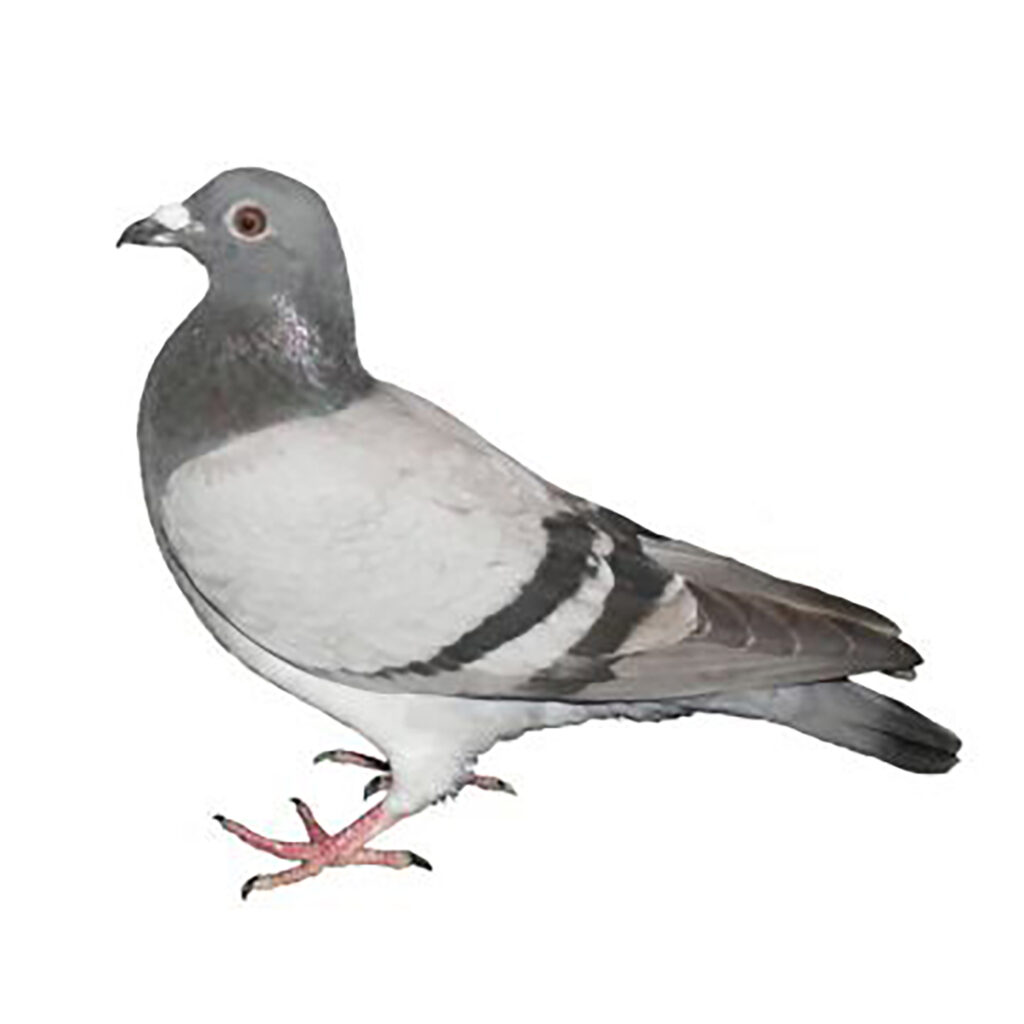
Pigeon racing is a “sport” in which specially-bred pigeons with high navigational skills perform nationally from November to March-April.
As the Government of India does not permit these birds’ importation, some individuals and organisations such as the Central Madras Homer Club breed and train pigeons, importing eggs from particular bloodlines and hatch them to bypass the law.
Pigeon Racing
Pigeon racing is a so-called “sport” or “hobby” in which specially bred pigeons (similar to the ones we commonly see but with high navigational skills) perform nationally from November to March-April when about 1,200 birds participate in races – and in varied competitions. The rest of the year the pigeons are bred and/or trained.
For example, in April 2022 the Karnataka Homing Pigeon Federation released 26 homing pigeons from 2 rectangular cages on a vacant plot in Delhi. From this starting point which they had never been before, they had to somehow find their way back to their respective lofts about 1,500 to 1,700 kilometres away. The birds had a red seal affixed on their wings and 2 rubber bands on their legs with concealed numbers for identification on reaching so that the fastest bird could be ascertained and awarded. After verifying the number and noting the time of arrival, the organisers of the race calculate the distance covered (in kilometres) and the pigeon’s velocity (in metres per minute). Some use Radio Frequency Identification via an electronic chip attached to the bird and a corresponding electronic clock with antennas at the loft so that the relevant information is registered automatically.
Culling is part of Training
The racing birds are trained when 3 months old with trial runs beginning with a distance of 2 kilometres and going up to 70 kilometres. This develops their stamina and homing instincts, and those that survive these short distances automatically learn to tackle hazards like predators – mainly hawks.
They do not publicise how many pigeons are forever lost during training and never return home – estimated at 60%. Their fate en route is any one’s guess given the weather conditions, lack of food, water, electricity wire shocks, and dangers in the form of bigger birds and humans. Called “basket culling” and deliberately carried out, knowing they won’t return inferior pigeons are released far from home. Others simply wring the necks of such unwanted birds admitting it is a necessary evil to maintain the quality of the racing pigeons.
Training and Racing
In 2020 a pigeon fancier of Chennai said that owing to many disturbances in the sky such as dish TV and network towers it is very difficult for pigeons to navigate because although every year almost 400 birds participate in 200 kms, 500 kms and even up to 1,500 kms races, only 10 pigeons return. The prize money is a meagre Rs 3,000/- but he earns by selling his home-bred birds for up to Rs 15,000/-. Maintaining his flock of 35 pigeons (their food and medicine) and training them to race costs him around Rs 1.5 lakh a year. He sees it as a hereditary passion bordering on prestige not attachment for the birds like one would for a pet dog and says that there are 800 persons like him.
Pigeon Clubs
A group of 10 formed the Hyderabad Homer Pigeon Club beginning racing in January 2012. They claim that pigeon racing is a “Nawabi shauk” and although uncommon, occurs in Chennai (considered the country’s capital for pigeon racing – according to the New Madras Racing Pigeon Association there are 5,000 fanciers out of which 1,000 race pigeons) under the auspices of 7 clubs of Tamil Nadu, 2 (down from 5) clubs of Kolkata and another 5 clubs in Karnataka with Bengaluru being prominent. BWC has also heard of the Kancheepuram Homer Pigeon Association that conducts competitions.
Club members have admitted to journalists that “prevention of diseases is the only escape” for the pigeons. Paratyphoid, Canker, Coccidiosis, E-Coli, Ornithosis, Sour Crop, Diarrhoea and Newcastle disease (Ranikhet) are common, contagious and dangerous. So if the birds get sick, they are immediately discarded. Abandoning and culling (read killing) goes hand in hand with raising and racing pigeons.
Flying pigeons (a cross between the local breed and Homer, and some from other states like the Rampuri ones from Punjab) are found at Mattanchery and Fort Kochi areas of Ernakulam. Some pigeon flying associations were established decades back, whereas others are relatively new. They have been conducting the Ernakulam Open Pigeon Flying Tournament regularly, so the “hobby-cum-sport” has become commercialised and attracts sponsors and pigeons belonging to around 200 persons who participate.
Training birds involves restrictions on their diet for 45 days during which time they are mainly fed almonds, raggi (millet) and calcium tablets. Wing and tail feathers are clipped so new ones grow – favoured because they are supposed to be lighter (not dusty!). Occasional culling (read killing) of young pigeons is carried out in order to concentrate of the best competitive birds; however, older birds are may be allowed to live out their normal (about 8 years) life spans. Two year old pigeons are the most wanted ones although all pigeons are quite fit to fly in competitions till they are five.
BWC feels the pigeons are lucky that in India there just aren’t enough takers for this “sport” although more people seem to be interested now than they were some years ago. However for the 2014 Lok Sabha elections, the Samajwadi and Aam Admi parties resorted to an “inexpensive” campaigning gimmick of tagging pigeons with their symbols tied to a kachha thread and making them fly to different areas around Lucknow. BWC sent a complaint about this to the Election Commissioner because some years ago the Election Commission had assured BWC that the use of animals for campaigning had been banned.
Breeding and Flying Pigeons
The majority are high fliers and Gerebaaj/Tippler is the most well known breed that flies and goes on flying. Whereas, the Roller pigeons fly to roll, and the Homing pigeons fly to race home.
Ishkbaazi is pigeon flying and the award at the National Pigeon Flying Competition is the Rashtriya Kabutar Udaan Pratiyogita. Different competitions are held some for young birds (born during that year) and others for the old birds.
In 2017 at places like Ludhiana and Moga in Punjab, pigeons participating in flying competitions were found to be given cheaply available opium (afeem) in water or were injected with it in order to make them fly up in the sky for a long period – the pigeons that do not touch ground for the longest time win.
In May 2020 complaints were received by BWC with supporting videos showing how pigeon fanciers of Punjab were capturing and killing raptors because they were attacking their pigeons. They were capturing them (chidimaars) by bringing them down from mobile towers, using hooks, guns and even attaching iron claws on their pigeons so falcons that prey on them get injured. Upon bringing this to the attention of the Wildlife Department, they promptly cracked down on the culprits and 24 FIRs were filed. However, BWC feels the underlying reason is cruel pigeon flying which in itself needs to be stopped.
Human Fights, Extortion and even Murder over Pigeons
In July 2025 the Bombay High court directed the Brihanmumbai Municipal Corporation to lodge FIRs against persons “illegally” and in “defiant” manner feeding pigeons at Dadar (West) and other Kabootarkahanas despite a policy prohibiting the same and HC refusing interim relief for feeding in its earlier orders. This resulted in requests (political as well) to the Commissioner BMC to “find a balanced, humane solution” with alternative arrangements being made to feed pigeons in open spaces (regulated feeding zones) such as Bandra Kurla Complex, Race Course, Aarey Colony and Sanjay Gandhi National Park. The Maharashtra CM issued a statement saying “Saving the lives of pigeons, protecting the environment and securing citizens’ health – all three are important. Until an alternative system in in place, the BMC should continue a regulated and controlled supply of food to the pigeons”. He also said that any decisions concerning pigeon-feeding zones must be accompanied by alternative and compassionate solutions to prevent the starvation of birds. This resulted in the BMC declaring that as an interim measure until a report from an expert committee and further orders from the HC are received, it had permitted controlled feeding of pigeons at 4 new locations in the city for 2 hours in the morning.
Pigeon Race à la Tanjore
Kabootarbaazi
In 2004 a week-long annual competition for pigeons, commonly called Kabootarbaazi or Kulkul, was revived (Emperor Jehangir was a fan) with the setting up of the Agra-Firozabad Kabootarbaazi Association. The December 2011 event at Kuberpur (Agra) drew around 30,000 spectators.
On mounds between mustard fields, Khalifas, Ustads or Kabutarbaaz (different qualifications based on their skills in controlling flocks of pigeons) release their group of birds, some worth Rs 2.5 lakh, claimed to be “well fed on rich protein diets” (read unnatural diets for birds) that include ghee along with dry fruits, millet and corn. The ones that have successfully learnt to recognise voice commands, whistles, hand gestures, flags and colours, return to them. But, many land up in rival teams. In the end, the person who has the highest number of pigeons wins the competition. The team that covers the longest distance is also felicitated.
The sport involves annual championships in different places in India, including Jama Masjid, Old Delhi. In 2014, Shri Sarwan Singh, world champion for Kabootarbaazi, asked the Chief Minister of Punjab to recognise pigeon games as a state sport. BWC hopes it does not come to pass.
Beginning December 2015 through January 2016 the Kabootarbaazi contest was planned after a gap of three-four years in Agra district. However, it was stopped before completion by the Ministry of Environment, Forests & Climate Change after the Animal Welfare Board of India objected on cruelty grounds.
Despite this, events continue to be illegally held in different parts of India, particularly in Agra, Lucknow, Old Delhi, Hyderabad, Gahour (Ludhiana), Tumber Bhan (Firozpur), Gokalgarh (Haryana) and other places. Animal activists have managed to get several events cancelled but that is not good enough – state governments need to take timely action to stop them. More importantly, the Ministry of Culture (Government of India) should not be endorsing and promoting this so-called game.
Luckily there are people who no longer enter their pigeons in competitions although they fly their dwindling number of birds every evening. It involves time and money and is therefore frequently referred to as “faltu logon ka kaam”.
However, Rajasthan has continued to keep this so-called Mughal sport of Kabootarbaazi going in Ajmer, Tonk and Jaipur with many Khalifas (masters) and Shagirds (apprentices) preparing for a 2,021-pigeon mega race at Ajmer in winter 2025. They have even signed stamp paper agreements. There are two types of competitions. One, where pigeons released and allowed to mingle with the other side using familiar calls – whoever attracts the most rival’s pigeons to his terrace at the end of the day is the winner. The second competition specialises in great stamina and the winner is the one that circles the sky the longest (10+ hours) within sight of the terrace. In the end they come down exhausted and having lost weight.
BWC hopes forthcoming Ajmer event will be stopped on grounds of cruelty just like it was at Agra. Mostly Kalapankhi, Lakka, Pari and Mookhee breeds are trained for endurance and made to undergo 3-6 months of rigorous training before they can compete. They are kept in a loft where they are fed almonds, raisins, coriander and melon seeds, mirchi charu, akal khera and mulethi, all mixed with bajra, and familiarised with the terrace and rooftop surroundings. They are taught to react to clapping, whistling and stick signals by associating them with food and flying. The sound commands given to them are called jet and include sharp vocal cues such as burr, barr, aaaaa, aao and zuuu. Pigeons that ignore these signals are unwanted, shifted out of the loft, and fed less. Like racing pigeons, they are first released within a short radius of say 50 metres and then extended gradually to several kilometres.
No Peace for the Birds
BWC has known celebrities or politicians in India to celebrate some festival or function (like after the Independence Day flag hoisting) by taking a white pigeon/dove (or two) in hand and making it fly off. They couldn’t care less what happens to the poor birds that couldn’t even be homing pigeons – not that they should be used just because they would probably fly home.
Export of Doves Banned
Page last updated on 04/11/25