


Ambar, as ambergris is called in India, has for centuries been used as agnijara in the Ayurvedic and Unanimedical systems and, in Homeopathy, as ambra grisea.
Whale oil was the world’s “oil industry” till the 19th. century, to be replaced by petroleum and other less-expensive oils.
Ambergris
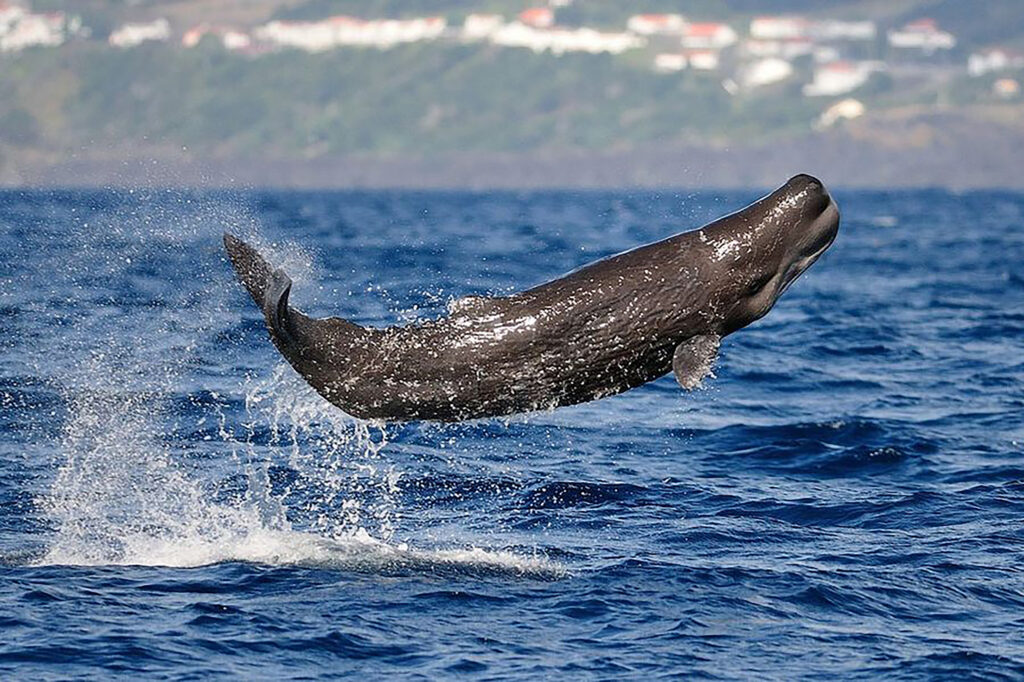
In French amber gris means grey coloured fossilized tree resin. However, ambergris is a solid waxy substance produced in the intestines of sperm whales. It could be black, grey, different shades of brown, or yellowish vaguely resembling the tree resin amber. That’s how ambergris got its name even though it was later found to have originated from sperm whales.
Demand for Ambergris
Whales are now protected worldwide, but the ever-growing demand for ambergris continues. Commercial whaling ended in 1986 prior to which bloody harpooning of sperm whales occurred for ambergris (found in stomachs of dead sperm whales) and other products such as spermaceti and sperm whale oil used as a machine lubricant, and for whale meat of course.
Beauty Without Cruelty had also campaigned towards achieving the international ban on whaling and used to recommend the use of jojoba oil in place of sperm whale oil. The International Whaling Commission kept advising quotas to be reduced. Around 1977 we got several institutions like the Central Arid Zone Research Institute, Jodhpur, Rajasthan, Maharashtra’s Agricultural Universities at Parbhani and Rahuri, and the Avatar Meher Baba Trust at Meherabad near Ahmednagar, to successfully grow jojoba (Simmondsia chinenisis) seed in the hope that India would stop importing sperm oil and use jojoba oil instead.
It should be noted that Whales and Sharks are different although there exists a Whale Shark Day (Vahili Utsav) to protect sharks in Gujarat.
For detailed information on Sharks’ Fins (under Gourmet Foods) please read
https://www.bwcindia.org/Web/Awareness/LearnAbout/GourmetFoods.html
In demand for…
Ambergris is best known for its use as a fixative in perfumes alongside other animal origin ones like musk/kasturi (deer and musk rat), civet/gandhamarjara (cat), operculum/nakhla (mullosk), castoreum (beaver/rat) and hyraceum (mammal resembling a guinea pig).
The Chinese use ambergris not only in fragrances, but in medicine and as aphrodisiacs.
Ambar as ambergris is called in India, has for centuries been utilised as agnijara in Ayurvedic and Unani systems of medicine, and in Homeopathy as ambra grisea.
Ambergris has been historically used worldwide as an ingredient in food and drink, and ambergris-laced sugar fetches a high price.
BWC was shocked to know that there exists an online UK based business called Ambergris Connect which provides a global service to first determine the genuineness of the ambergris and then facilitate introductions between sellers and buyers.
Here, There and Everywhere
Till 2020 hardly any ambergris was found in India and fishermen did not know what it exactly was – often thinking it was jelly fish and therefore not evincing any interest. For example, in 2013 fishermen of the Chinnoor coastal village had mid-sea stumbled upon a huge lump of ambergris which weighed about 15 kgs and was considered a “rare find” – they deposited it with the panchayat officials who informed the Customs Department at Cuddalore Old Town, who took custody of the substance.
Also, in August 2021 the WCCB were responsible for the biggest ever seizure of ambergris weighing 80 kgs in Bengaluru for which 5 persons were arrested.
Again, in September 2021, 11 kgs of ambergris was confiscated from 4 persons in Bengaluru. Coincidentally on the same day 2 persons were arrested in Mumbai for peddling nearly 6 kgs of ambergris in Mumbai.
In March 2022 the Madurai District Police arrested and handed over to the Forest Department 3 persons along with the ambergris worth Rs 2.55 crore they were smuggling, cash and the vehicle in which they were travelling from Sivaganga to Natham in Dindigul in order to sell it.
Again, in February 2023, 5.7 kgs of ambergris worth another Rs 5 crore was seized (along with vehicles) and 2 persons were arrested by the Sangli police.
Again in June 2024 ambergris worth 3.2 crore was found on 2 persons who had come from Ratnagari district to sell it in Pune. In November 2024 ambergris worth Rupees 75K and blackbuck horns 25K were seized from a hotel in Manje Bhilarewadi by the Forest Division in Pune from 2 persons from Balajinagar and Thergaon who were arrested.
About 1¼ years later, in March 2026, the Satara Forest Department officials arrested 7 persons (hailing from different parts of Maharashtra) in Mahableshwar for possessing 5.3 kgs ambergris worth Rs 5.3 crore. Soon after in April 2026 the Sindhudurg Forest Department in an undercover operation arrested 4 persons from the Shiroda area of Vengurle tehsil in the district who were peddling 9.12 kgs ambergris worth Rs 7 crore.
Sudden Smuggling
Page last updated on 29/06/26